World of Gaianar - Third Edition
The World of Gaianar
Third Edition
Menu
  • External link opens in new tab or window
  • External link opens in new tab or window
  • External link opens in new tab or window
  • External link opens in new tab or window

Mathematician - Spiritual Powers - Tier 3

Quick Links: External link opens in new tab or windowTier 1 | External link opens in new tab or windowTier 2 | External link opens in new tab or windowTier 3 | External link opens in new tab or windowTier 4 | External link opens in new tab or windowTier 5


Mathematicians are a scholarly character class. They have poor combat skills and low hit point accumulation. However, they have five Tiers of spells as well as a large number of spells within each Tier. By solving complex formulas, a Mathematician can create geometric structures from nothing, grant animating to inanimate objects, create protective barriers, and summon weapons of exquisite sharpness. Most formulas can be cast from a distance and thus allowing the Mathematician a better chance of surviving combat.  

Fractal Compression1.0 BMS | significantly shrinks an object for 1 turn/level

Fractal CompressionFractal Compression

Tier: 3
Computation: 8 segments
Area of Effect: One person or object
Range: 1// per level, line of sight
Glass Required: Yes
Duration: 1 turn per level
B-M-S Cost: 1.0
Classification: Transformation

This formula is a more advanced version of the Tier-2 formula "Compression". function enables a person or object to be temporarily shrunk down to 10% normal size. The shrinking of an object does not affect any of its properties. A shrunken person could still have normal BAtCh, Hit Points, AC, and the like. However, the individual's weapon damage and movement speed would be quartered (because two-dimensional objects shrink in proportion with the square.) The weight of a shrunken person of object decreases with the cube. In other words, a character that is shrunk to 10% size would weigh 1% as much (likewise, a character who somehow increases size by 10x would weigh a thousand times as much! Don't believe it? Take a d6 and make it ten times larger by stacking dice in a 10-die x 10-die x10-die matrix.  You'll find (if you somehow have enough dice) that you've used 1,000 D6 dice to accomplish this increase of dimension. If this function is used against an unwilling target, the individual is entitled to a save versus system shock for negation. This function can affect 30 pounds per level of the Mathematician. If the target is too massive, the formula simply fails.


This power cannot be used to create an "instant slay" condition. For example, a Mathematician cannot use Fractal Compression to shrink a foe's necklace by 90% and thereby severing his/her head.  The shrinkage will always stop after doing a maximum of 2d6 points of damage. Supernatural items get a +1 save versus harmonics per degree of enchantment to negate the effects of this formula. The Mathematician can choose to shrink an object to a lesser extent. For example, if a Mathematician only needs to shrink an object by 70%, that can be accomplished with this formula.


Changes from the printed (book) version: The formula now has a fixed maximum shrinkage of 90% instead of randomly rolled dice. It also lasts turns per level instead of rounds per level.

Fractal Orb1.5 BMS | Summons a ball to run people over. 1 round.
Fractal Compression

Fractal Orb

Tier: 3
Computation: 5 segments
Area of Effect: 1 orb, 10' diameter
Range: 10// line of sight
Glass Required: Yes
Duration: One round
B-M-S Cost: 1.5
Classification: Fabrication (and Combat)

This formula conjures into being a shimmering sphere that is 10' in diameter, has the mass-equivalent of 300 pounds, and can travel at 60//. Once summoned, the Mathematician can choose a single direction for the Orb to travel and it will essentially run over anything in its path. Once unleashed, the Orb follows the contour of the terrain, thus it will roll through dips in the ground and scale walls. Anything run over by the Orb takes 2d6 damage. Anyone hit by the Fractal Orb must also make a successful Save vs Magical Weapon (at -2) or be knocked to the ground (and thus lose the next action - -either this round or the next round). This formula is particularly handy on large-scale battlefields where it might be possible to target a dozen or so soldiers at once. Note: Once unleashed, the Mathematician cannot change the Orb's direction. However, the Orb will inflict damage on anything that gets in its way along the 600' linear feet until which it travels. Because the saving throw penalty scales to the Mathematician's level, a highly experienced Mathematician might knock over enemies like a professional bowler rolls a strike.

Like many Mathematician spells, the formula becomes more potent as the caster ascends in level.

    • Levels 1 to 4: The damage is 2d6 and the saving throw is -2.

    • Levels 5 to 9: The damage is 2d6+1 and the saving throw is -4.

    • Levels 10 to 14: The damage is 2d6+2 and the saving throw is -6.

    • Levels 15 to 19: The damage is 2d6+3 and the saving throw is -8.

    • Levels 20 and higher: The damage is 2d6+4 and the saving throw is -10.


Changes from the printed (book) version: this spell is now a "mass driver" attack instead of a "homing missile" attack. 
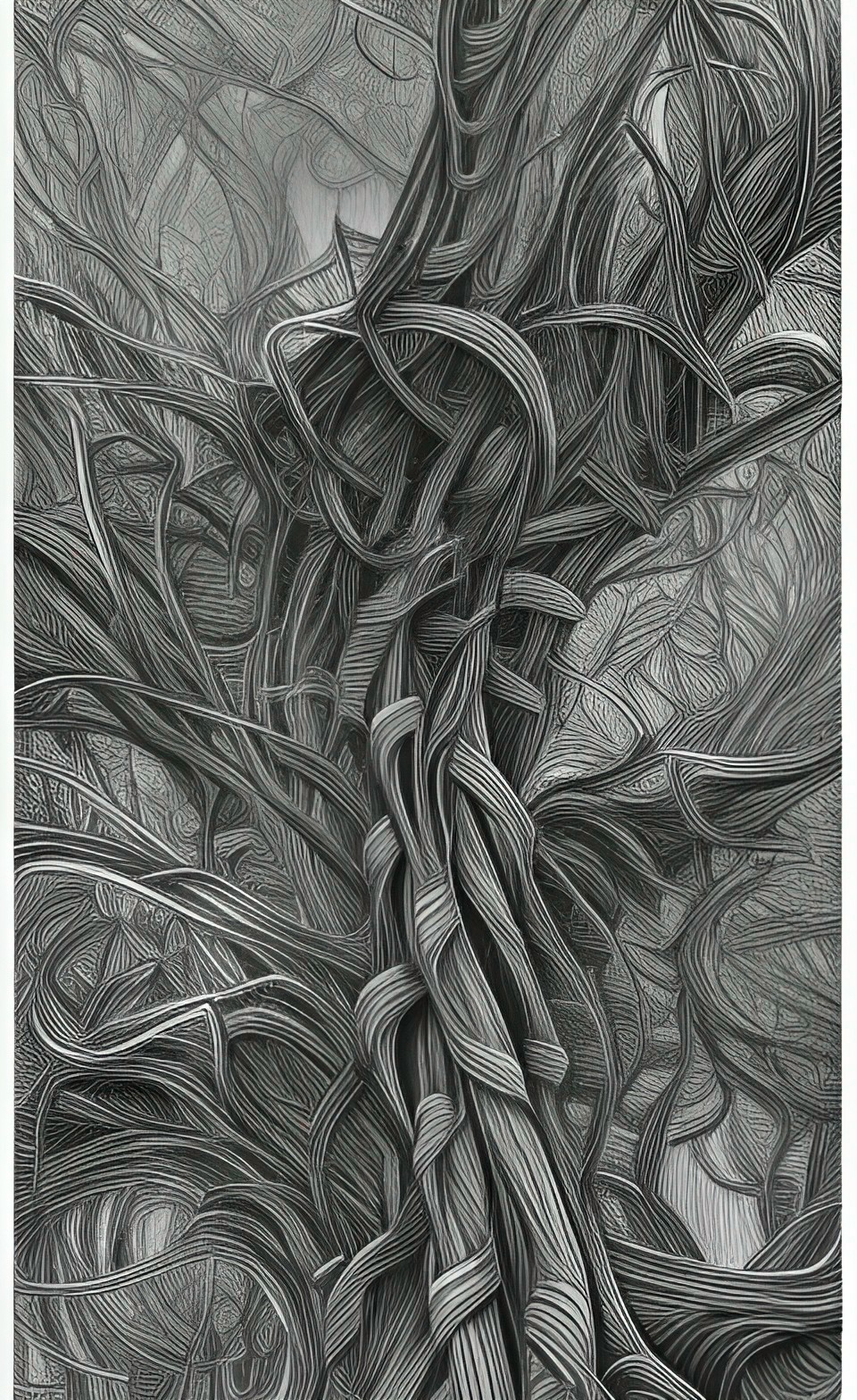

Fractal Thorn Vines2.0 BMS | Summons spiky vines for 1 turn/level

Fractal Thorn VinesFractal Thorn Vines

Tier: 3
Computation: 1 round
Area of Effect: Four10'x10' squares
Range: 2// per level
Glass Required: No
Duration: 1 turn per level
B-M-S Cost: 2.0
Classification: Fabrication

This formula is essentially a beefed-up version of Fractal Vines. As with the original, foes entering a region populated by Fractal Vines must make a Save vs. Area Effect or be rooted in place. Of course, making the saving throw only allows the targets to move up to 2// in any direction (presumably out of the area of effect). To any who either foolishly remain in the area of effect or are simply too far from the boundary, they must make a saving throw each round or become rooted for that round.

Targets ensnared by vines can still do other actions such as case spells or fire missile weapons. Melee combat is generally out of the question unless the Game Master rules there is some exceptional reason why hand-to-hand combat might still work. Moreover, targets ensnared by the vines are unable to advance or retreat until the vines are destroyed. A 10'x10' square of vine-covered ground has one Structural Point of resistance and AC(5). The vines can also reach up to 10' in an attempt to ensnare flying or levitating foes. Where this spell differs from the Tier-2 version is that foes ensnared by the vines also take 1d6 damage for each round that they take direct action (such as using missile weapons or casting spells). If the ensnared foes remain still and simply wait for the formula to end, they do not take damage.

With regard to placement, the Mathematician generally has a free hand. The squares can be adjacent or merely touch at the corners.  The Mathematician can also cast it upon vertical surfaces. For instance, one pane could be rooted to the sidewalk whilst another be bound to the side of a house. The panes must always touch, even if only tangentially.

The damage and quantity of fractal squares increase as the Mathematician ascends in level. Note that Constructs take double damage.

    • Levels 1 to 4: The Mathematician can case four 10'x10' squares of Fractal Vines. The damage is 1d6/round. The vines have AC(5).

    • Levels 5 to 9: The Mathematician can case six 10'x10' squares of Fractal Vines. The damage is 1d6+1/round. The vines have AC(4).

    • Levels 11 to 14: The Mathematician can case eight 10'x10' squares of Fractal Vines. The damage is 1d6+2/round. The vines have AC(3).

    • Levels 15 to 19: The Mathematician can case ten 10'x10' squares of Fractal Vines. The damage is 1d6+3/round. The vines have AC(2).

    • Levels 20 and higher: The Mathematician can case four 10'x10' squares of Fractal Vines. The damage is 1d6+4/round. The vines have AC(1).


Changes from the printed (book) version: The targets do not take damage if the remain fully passive.
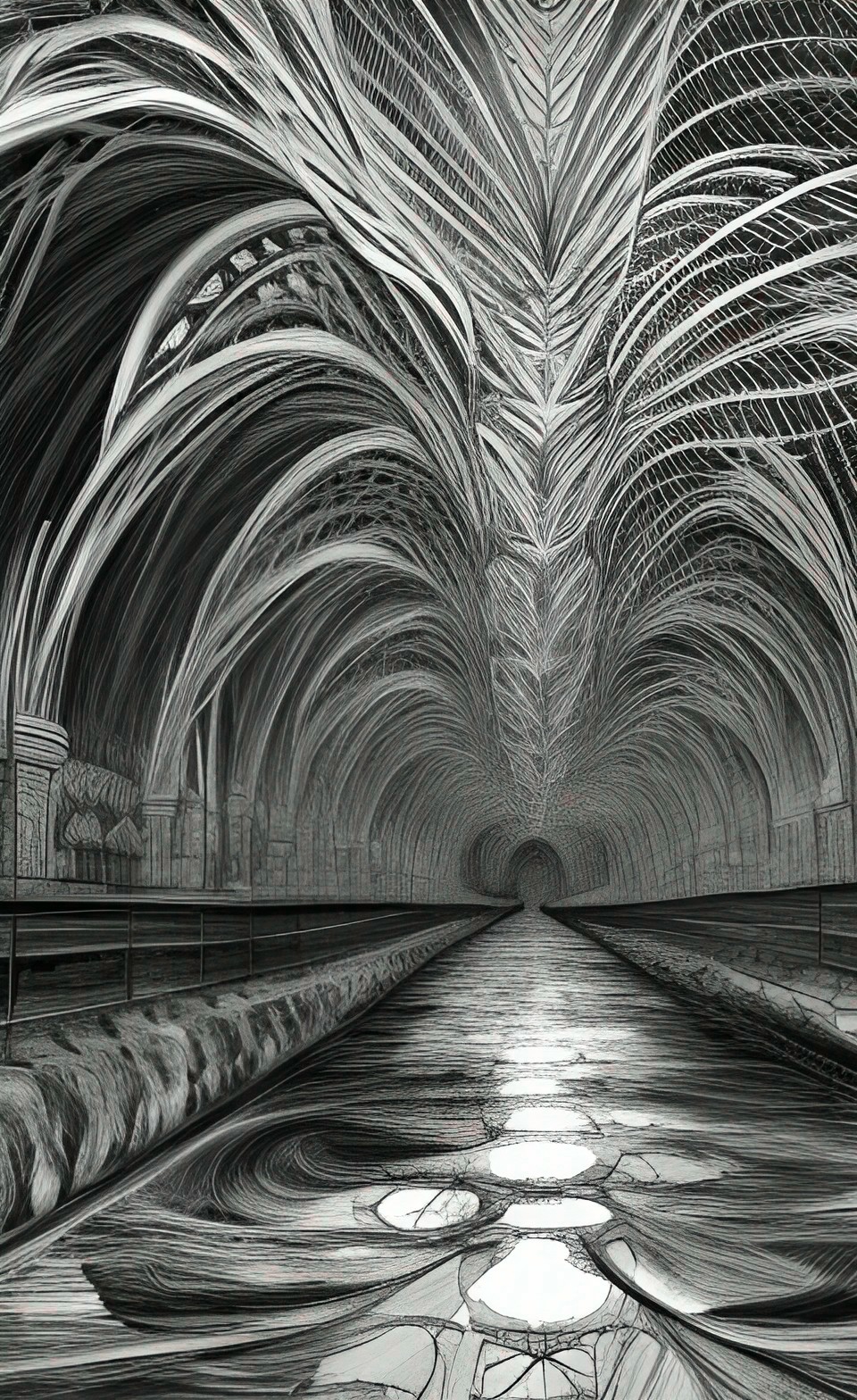
Geometric Tube1.0 BMS | Creates freestanding tubes for 1 turn per level

Geometric TubeGeometric Tube

Tier: 3
Computation: 3 segments
Area of Effect: One cylindrical segment per level
Range: 1// per level
Glass Required: Yes
Duration: 1 turn per level
B-M-S Cost: 1.0
Classification: Fabrication

This formula is similar to other Mathematician "Geometric" formulas in this it conjures into being freestanding structures out of pure geometry. In this case, the Mathematician can fabricate one segment of tube that is up to 10' diameter and up to 20' in length. The Mathematician can, of course, make the dimensions smaller. The Mathematician can easily join various segments in either a linear fashion or he/she can have the joints turn at a perfect 90-degree angle. The tubes can also be joined to any Geometric Sphere that the Mathematician may have cast earlier (but not joined to a Geometric Sphere cast by a different Mathematician).

Changes from the printed (book) version: This formula now lasts turns per level instead of rounds per level; the dimensions are 10'x20' instead of 5'x25'.
Imaginary Translation4.0 BMS | Sends a foe to the Imaginary Reals for 1 turn/level

Imaginary TranslationImaginary Translation

Tier: 3
Computation: 3 segments
Area of Effect: One person or creature
Range: 1// per level line of sight
Glass Required: Yes
Duration: 1 turn per level (modifiers below)
B-M-S Cost: 4.0
Classification: Conversion, Travel


This powerful formula allows the Mathematician to temporarily banish one person or living creature to the Imaginary Realm. This other plane of existence is the realm of thoughts, ideas, and dreams. Abstract concepts take on visible shape in the Imaginary Realm. Few things are as they appear. When a living being is sent to the Imaginary Realm, there is a strong tendency for the person to create a new reality out of whole cloth. After all, thoughts have power in the Imaginary Realm, and thoughts shape the environment of that realm.


If the trapped character does nothing, he/she will automatically return to the ordinary realm when the power of the formula expires. However, by force of will, the banished foe can return sooner if he/she makes a successful attempt to rationalize one's self out of the Imaginary Realm. Regardless of bonuses, the duration of this formula is never shortened to less than 1 round per level. As always, ordinary Constructs and Undead are immune to this formula due to them having no imagination.


Bonuses and penalties are as follows:


ModifierCheckResult
Foe is a MathematicianWillpowerSpell duration halved if successful
Foe is a Shaman or BarbarianWillpowerSpell duration doubled if the check fails
Foe has the Mathematics proficiencyKnowledgeSpell lasts 9 rounds per level if successful
Foe has high Knowledge (16+)KnowledgeSpell lasts 9 rounds per level if successful
Foe is a WishsingerBMSSpell lasts 11 rounds per level if failed
Foe has high BMS (16+)BMSSpell lasts 9 rounds per level if successful
Foe has low BMS (<10)BMSSpell lasts 11 rounds per level if failed
Foe has low Knowledge (<7)KnowledgeSpell lasts 11 rounds per level if failed
Foe has the Occult Knowledge proficiencyKnowledgeSpell lasts 11 rounds per level if successful (in other words, the character gets distracted)


All of the modifiers stack. therefore, a Shaman with BMS 16, Occult Knowledge, and Knowledge 16 that gets banished by a 12th level Mathematician could theoretically have the following modifiers: double duration (class), -1 round per level (BMS), -1 rounds per level (Knowledge), and +1 rounds per level (Occult Knowledge, for a total of 264 rounds (i.e. 24 11-round periods in sequence).


The Mathematician does have the option of using this formula on himself/herself. For example, the Mathematician might be trapped in a burning building and use this power in order to be whisked away to the Imaginary Realm and then return several turns later when the fire is exhausted. All of the standard modifiers apply when casting this spell upon one's self. However, the Mathematician can also choose to ride out the full duration.


 Changes from the printed (book) version: the timing modifiers have been slightly altered. The Mathematician can now cast this spell on himself/herself.

Limits1.25 BMS | Keeps a foe at arm's length for 1 round/level

LimitsLimits

Tier: 3
Computation: 1 segment
Area of Effect: One person or object
Range: 10// per level, line of sight
Glass Required: Yes
Duration: 1 round per level
B-M-S Cost: 1.25
Classification: Combat

The concept behind a mathematical "limit" is that the target of the formula must progressively expend greater and greater energy to reach the Mathematician's location. The amount of energy expended is doubled at each point in which the distance is halved. the energy utilization quickly becomes a vertical line.

There are several handy applications for such a formula. The Mathematician could target an incoming cannon ball or missile and make the object miss the intended target by way of siphoning its kinetic energy. The Mathematician can keep the town bully at arm's length by preventing him from getting close enough to land a blow.

For humanoid targets, the sensation of being bound by Limits is similar to that of being bound by an elastic cord that gets less stretchy the closer one gets to the Mathematician.

While the Mathematician might initially only be able to cast Limits on small objects (such as a bullet or a thrown dagger), the caster does gain the ability to stop larger objects as he/she ascends in level.

    • Levels 1 to 4: The Mathematician can stop an object of dagger size (or up to 5 pounds)
    • Levels 5 to 9: The Mathematician can stop an object of watermelon size (or up to 25 pounds).
    • Levels 10 to 14: The Mathematician can stop an object the size of an engine block (it would also hold the town bully at arm's length) or up to 250 pounds.
    • Levels 15 to 19: The Mathematician can stop an object the size of a piano (or up to 1,500 pounds).
    • Levels 20 and higher: The Mathematician can stop an object the size of a delivery van (or up to 4,500 pounds).


Changes from the printed (book) version: The original spell was missing the range component. That has been corrected.
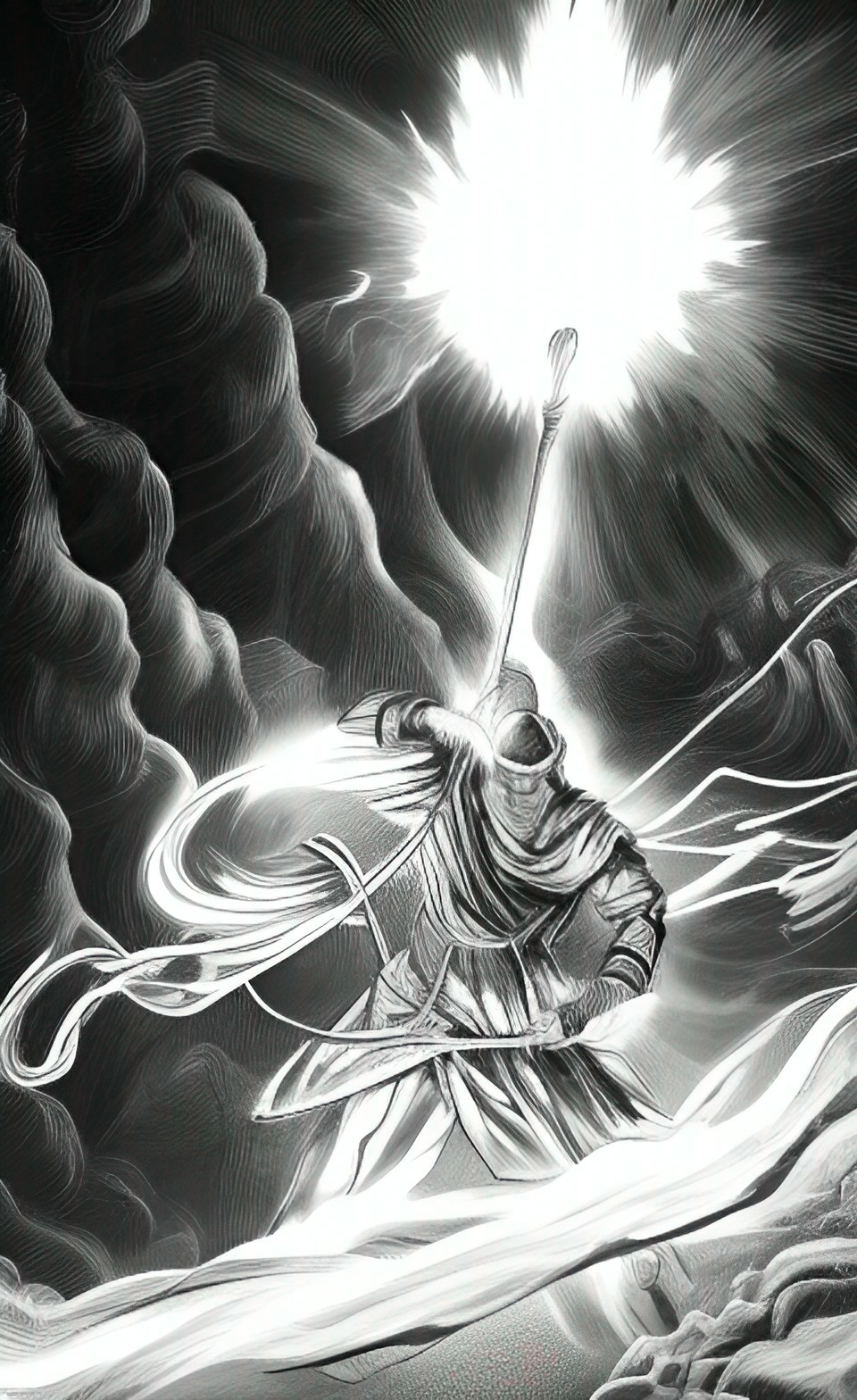

Monofilament Whip1.25 BMS | Creates a whip suitable for flogging! 1 round/level

Monofilament WhpMonofilament Whip

Tier: 3
Computation: 2 segments
Area of Effect: The synthesized item
Range: Same as a standard whip
Glass Required: No
Duration: 1 round per level
B-M-S Cost: 1.25
Classification: Combat

Like the Monofilament Throwing Star formula, this spell creates a temporary weapon out of pure geometry. By all appearances, the conjured whip appears to be made of shimmering, spun glass that is somehow flexible as well.  It is, in fact, made of the same virtual substance as a Geometric Shield (and related formulas). Targeting with the Monofilament Whip operates on the principle of the Ranged Touch Attack. This type of attack is calculated using the Mathematician's melee BAtCh against armor class 10 (think of "touch" football where a tackle is just a slap on the back).

Like all Monofilament weapons, the damage inflicted varies greatly depending on what is being struck.
    • Ordinary non-living matter: 1d6
    •  Living matter (and people): 2d6
    • Energy-based shields not created by pure geometry: 3d6
    • Constructs and geometric contrivances: 4d6

Changes from the printed (book) version: "Ranged touch attack" is explained; the damage is scaled more logically.
Phase Object4.0 BMS | Moves an object from our reality into another. Permanent.

Phase ObjectPhase Object

Tier: 3
Computation: 1 round
Area of Effect: One object (weight scales with level)
Range: 1// per level line of sight
Glass Required: Yes
Duration: Permanent
B-M-S Cost: 4.0
Classification: Conversion


This formula allows a Mathematician to translate a physical object from ordinary space into an out-of-phase reality. Examples of out-of-phase realities are the Plane of Light, the Conflagration, the Dark Matter Universe, the Imaginary Realm, the Plane of Shadow, Elemental Planes, and the Ethereal Realm. Of course, many more realities exist than just these. Gaianar is fortunate (or unfortunate, depending on one's perspective) to be exist at the crossroads of numerous planes of existence.


While, on the surface, this formula looks like one that would be rarely called upon, a clever Mathematician could find several lifesaving uses for this formula. For example, a Mathematician could phase a ticking time-bomb into either the Conflagration or the Plane of Fire. As both realms are dominated by fire, it is unlikely that a detonating bomb would cause any harm to the residents therein. A broken nuclear fuel rod could be translated into the Dark Matter Realm and would be very unlikely to do harm to creatures who make their home in that plane of existence. Likewise, an enemy's sword could be sent to the Plane of Earth, thus disarming one's foe.


In the latter example, the foe holding a targeted item would be entitled to a Save versus Magical Weapon to avoid his/her item being translated away. Living creatures cannot be translated to other planes. However, it is helpful to remember that Undead and ordinary Constructs are not considered to be "living".   


Like other "utility" spells of this nature, the area of effect is as follows: 1 pound per level of solid matter; one quart per level of liquid matter; one 10'x10'x10' volume per level of gaseous matter. Note also, that translated objects don't actually move much. For example, a sword translated to the Plane of Earth would materialize in the closest possible relevant coordinates in that Plane when compared to the coordinate location in Gaianar.


Changes from the original (book) version: This is a new spell that has been rewritten from scratch. It replaces "Create Minor Dark Matter", which has been discarded.


Radiation Beam2.0 BMS | Creates a beam of radiation for 1 turn/level

Radiation BeamRadiation Beam

Tier: 3
Computation: 2 segments
Area of Effect: One person or object
Range: 1// per level, line of sight
Glass Required: no
Duration: 1 turn per level
B-M-S Cost: 2.0
Classification: Utility (possibly healing or elemental fire)

This handy formula allows the Mathematician to project a beam of electromagnetic radiation in a precise, controlled, straight line. Depending on the type of radiation summoned, the Mathematician could accomplish all manner of tasks such as welding two objects together, signaling for help, cauterizing an infected wound, creating a temporary tattoo, starting a campfire, lancing a boil, or drilling small holes. The Mathematician can change the type of radiation produced once per round. For instance, the Mathematician could sterilize a comrade's infected wound using ultraviolet light, then start a campfire with infrared, and then flash a S-O-S into the night sky with visible light.

The Mathematician can also target foes with this formula. With a microwave burst, a target could be brought to his/her knees with pain (save vs magical weapon, incapacitates for each round of exposure), or do actual physical damage (a laser, 1d6), or inflict radiation poisoning (gamma ray, 10 REM per round of exposure, save versus magical weapon to avoid). For offensive attacks, the targeting follows the principle of the Ranged Touch Attack (i.e. use the Mathematician's melee BAtCh as if targeting AC(10)).

Changes from the printed (book) version: this formula has been expanded in scope to include utilitarian functions. 
Radiation Storm2.5 BMS | Creates a cloud of radiation for 1 round/level

Radiation StormRadiation Storm

Tier: 3
Computation: 1 round
Area of Effect: One 10'x10'x10' volume
Range: 1// per level line of sight
Glass Required: Yes
Duration: 1 round per level
B-M-S Cost: 2.5
Classification: Combat

By completing this formula, the Mathematician is able to call forth a storm of radiation that is confined to a 10'x10'x10' volume. While the power is in effect, anyone who remains in the affected volume takes 5 REM per round of radiation poisoning and 1d6 round of ordinary damage (from infrared and ultraviolet radiation).

Alternatively, this formula can be used as a decontamination field. In this application, the radiation produced is much weaker and serves to sterilize all affected surfaces and any open wounds. Humanoids targeted with the "decontamination" variant do not take any physical damage and incur only 1 REM in radiation poisoning. Once completed, the target's skin, clothing, and carried possessions are rendered utterly devoid of bacteria and other biological contaminants.

Changes from the printed (book) version: This is a new spell that has been written from scratch. It replaces "Dark Matter Storm" which has been replaced.


Reinforce2.5 BMS | Reinforces walls, bridges, and boats for 1 turn/level

ReinforceReinforce

Tier: 3
Computation: 4 segments
Area of Effect: One surface (up to 10'x10') per level
Range: 1// per level, line of sight
Glass Required: Yes
Duration: 1 turn per level
B-M-S Cost: 2.5
Classification: Defense

This formula can be applied to any wide, flat, "planar" surface such as a castle wall, a road surface, a boat hull, a storefront window, or a roof. While the formula is in effect, surfaces protected by this spell have 30 hit points per Structural Point instead of the usual 10 hit points per Structural Point. This formula is handy in situations such as siege defense or boat combat on the high seas.  However, this formula has utilitarian uses as well. For example, a bridge could be reinforced and then a cargo load that would be ordinarily too heavy could be brought across the bridge.

Changes from the printed (book) version: This formula now lasts for turns per level instead of just one turn.
Sight of Logic and Reason1.75 BMS | See through walls and detect illusions. 1 turn/level

Sight of Logic and ReasonSight of Logic and Reason

Tier: 3
Computation: 1 round
Area of Effect: The Mathematician's Glass Tablet
Range: Touch
Glass Required: Yes
Duration: 1 turn per level
B-M-S Cost: 1.75
Classification: Utility

This handy utility formula allows the Mathematician to use his/her glass tablet to peer through solid objects such as wood or stone. The Mathematician can see through walls as thick as ten feet. Additionally, the Mathematician can use this formula to receive a 50% bonus to his/her Detect Illusion or Detect Stillpoint abilities. Thus, if the Mathematician would ordinarily have a 30% chance to detect a Stillpoint, that possibility is increased to 45% while the power is in effect.

Other handy uses for this formula include: Determining if a locked box contains treasure or an explosive; determining of a coffin contains a dead body or bricks; scanning a living organism for foreign objects (such as a bullet fragment accidentally left in a patient's body after surgery).

Changes from the printed (book) version: The casting time is one round instead of one turn; the duration is turns per level instead of rounds per level; it is no longer a substitute for See Into Spirit Plane.

Subvert Construct2.25 BMS | Take temporary control of a Construct. 1 round/level

Subvert ConstructSubvert Construct

Tier: 3
Computation: 1 round
Area of Effect: One Construct
Range: 1// per level, line of sight
Glass Required: Yes
Duration: 1 round per level
B-M-S Cost: 1.75
Classification: Combat

This formula allows a Mathematician to temporarily take control of Constructs that he/she did not create. If the Construct has fewer Structural Points than the Mathematician has in levels, then the formula automatically succeeds. If the Construct is of equal or greater power (Structural Points vs experience levels), then the Construct is entitled to an Item Save versus Harmonics or a Save versus Sleep/Charm (whichever is more appropriate) for negation. Living Constructs cannot be subverted. However, they will most certainly know that an attempt to subvert was made should they be targeted with this formula.

A subverted Construct can be commanded to do any task that is within its capabilities. It cannot, however, be commanded to attack its creator. At the end of the formula's duration, the Construct's operating system reboots for one round, leaving it incapacitated for that period of time.

Changes from the printed (book) version: Living Constructs will automatically know if a subversion attempt was made. There is now a 1-round reboot at the end of the spell.


 Things to Consider

  • Mathematicians do not rely on Faith or Spiritual Points. They rely on Knowledge and Body-Mind-Spirit.

  • Unlike many character classes, Mathematicians have no set alignment or wealth restrictions.

  • Mathematicians are the only character class whose powers access the Imaginary Realm.

  • The Mathematician is the only character class whose granted power is the detection of Stillpoints (time/space rifts, interdimensional portals, etc.)

  • Like the Gunslinger, a Mathematician has some ability to resist illusions. A Mathematician/Gunslinger hybrid would stack this ability.

Column


Column


ctodd@gaianar.com


  • Home
  • Downloads
  • Rules for Players
  • Spiritual Powers


Copyright 1991-2021 World of Gaianar - Version 3.0

Written and Designed by Christopher Todd

Co-Designed by Matthew Hannum


close lightbox