World of Gaianar - Third Edition
The World of Gaianar
Third Edition
Menu
  • External link opens in new tab or window
  • External link opens in new tab or window
  • External link opens in new tab or window
  • External link opens in new tab or window

Character Races


Playable Sentient Character Races


External link opens in new tab or windowAttribute Modifiers by Race | External link opens in new tab or windowCharacter Class Options by Race


ChangelingAscended Humans

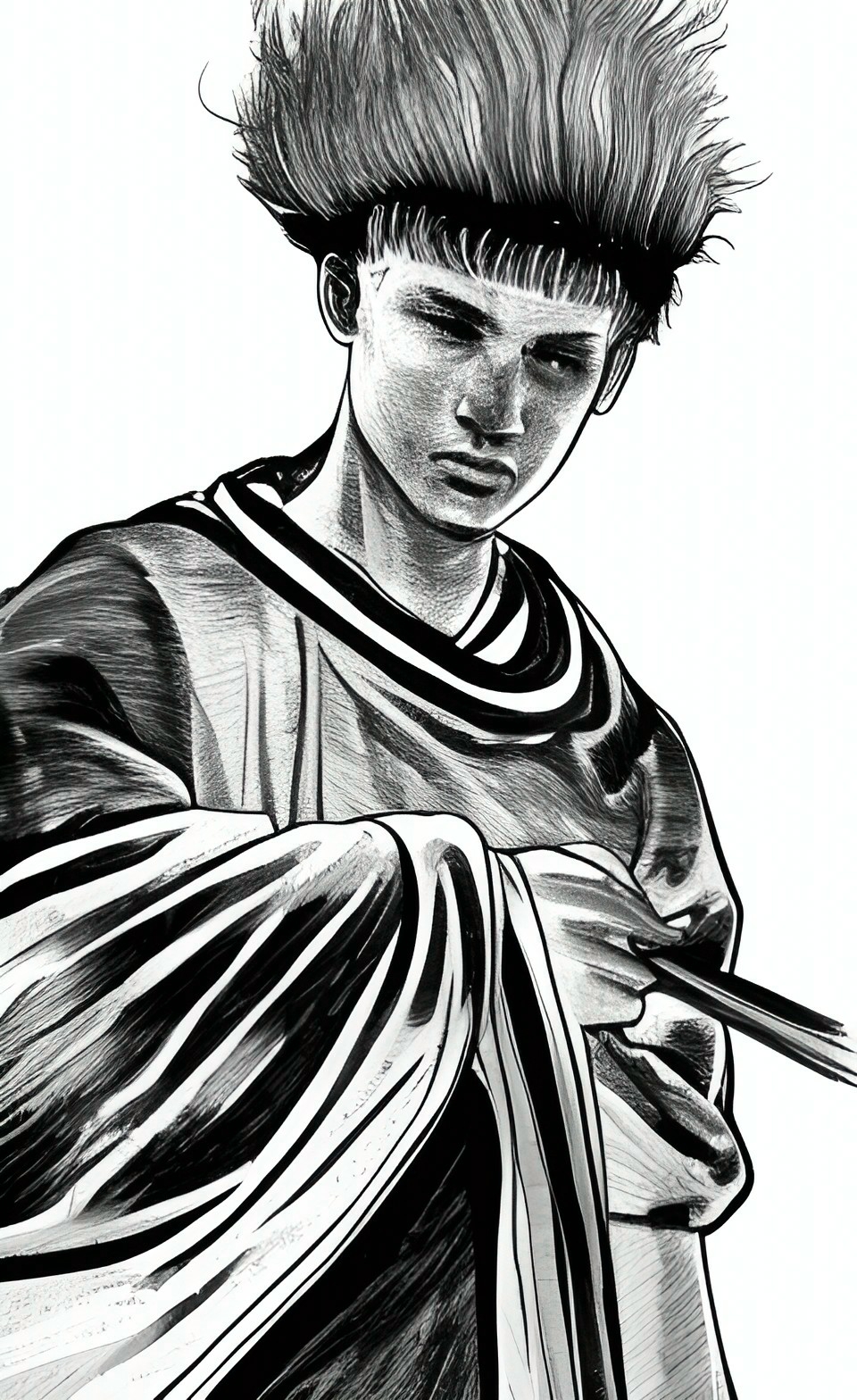
Changelings are a strange race indeed. From a genetic standpoint, Changelings are very closely related to humans. Like other races of Gaianar, the changelings have their roots in humanity. However, this race was created by way of divine intervention of the True One, the supreme God of Good worshipped on Gaianar. During a period of spiritual darkness in a history that shall never be forgotten, there was one community of Humans who stayed loyal to the Lord of Light while the rest of the world gave their souls freely to the False One and the Viper Lord. Even when all the other civilizations had forgotten about the Light, the civilization on the Isle of Gales remained faithful. And so it was from this one island that belief in the Light was reseeded throughout many areas of Gaianar. It was this new race, the Changelings, which carried the standard of this Light.

A Changeling can truly be said to lead a double life. An immature or early adolescent Changeling looks, for all intents and purposes, Human. Upon reaching late adolescence, however, a maturing Changeling undergoes a physical and mental metamorphosis in which the higher aspects of the race first manifest (hence being called a "Changeling"). This transformation is known collectively as "The Change" or "The Awakening". It is said that a Changeling is a little more than man, a little less than Angel.
An average adult Changeling stands slightly shorter than many of their Human counterparts but is much taller than Dwarves. As a mean, an adult male Changeling stands about 5'5".

Some of a Changeling's more distinguishing physical features are their bright silver hair and eyes of sky blue, indigo, or dark violet speckled with silver. But the difference between human and Changeling goes much deeper than physical appearance. One of the gifts given to the Changeling race is the ability of limited flight. Without the aid of a hang glider or paraglider, a Changeling can fly for a period of several minutes (one round per two points of Endurance, rounded up) before having to recoup their strength. Aided by a hang glider (or similar craft) a Changeling can stay aloft indefinitely.

A Changeling's ability to fly is bought at the expense of Strength. As a Changeling's bones are hollow and their muscle tissue less dense than their Human counterparts, the Changelings have a racial maximum strength of 15. Their physical weakness is compensated by their high Dexterity, which may be as much as 21. A Changeling flies at 36// (three times a man's running speed) with Maneuverability Class A (can come to a stop, hover, then turn full circle in the same action).

Being aerial oriented, Changelings have excellent long-range vision and are able to identify individuals up to one mile distant. Their close range vision is somewhat blurry however. This results in a -20% penalty for finding objects, hidden doors, traps, unless wearing corrective lenses that compensate (during which time the long range vision bonuses are lost.)

By their very nature, Changelings are most comfortable in outdoor spaces. Changelings like high, mountainous regions as well as the vast open sea. But tunnels, caves, dungeons, and pits are quite a different story. So much do Changelings dread closed-in places that each member of this race is born with an incurable claustrophobia (of intensity 1d4). If a Changeling enters such an environment he or she must roll once every five turns to see if a panic attack results. A panicked Changeling can be calmed by either an invocation that specifically removes fear, or by establishing an empathic rapport with another character that is not afraid.
Among other race related bonuses, Changelings receive only half damage from falling.

Due of their acute far vision and blurry near vision, Changelings earn a +1 to hit when firing missile weapons but suffer a -1 penalty to attack in melee range.

Changelings are empowered with minor empathic abilities. They have a 20% chance of establishing empathic rapport with humanoids 60' (6//) or closer. This percentage is halved when trying to contact humanoids farther away than 6// feet. A Changeling's innate empathic ability also gives them the ability to shield themselves from supernatural attacks that specifically affect the mind. When attacked in such a manner, a Changeling has a 20% chance to resist such an onslaught.

Related to their empathy. Changelings can sense the presence of any intelligent life form within 60 feet (1d20 >3 for success). Intelligence is defined as anything more than animal intelligence (3 or better). Sense presence does not detect alignment or intent, or even what kind of creature is being sensed, and it cannot detect corporeal Undead. However, a Changeling using sense presence can usually tell the difference between party members and other creatures.

Sense presence can determine distance and direction of creatures being sensed. Invisibility spells do not shield a creature from a Changeling's sense presence ability. While a Changeling can sense through trees and wooden barriers, walls of stone or metal can shield an animal or humanoid from the Changeling's detection.

A note on Changeling culture and crafting: whereas the Dwarven race has become specialized in metal and stone, the Changelings have found a love for wood crafting. Changeling architecture is a wonder to see, as well as their wood sculpture. Changelings make all carpentry and artistic ability checks at +1.

In race relations, Changelings and Dwarves get along quite well; each race creates what the other cannot. Dwarves trade with Changelings for wooden items, food, herbs and spices. Changelings trade with Dwarves for metal items, ale, and rare minerals. Because neither race wants the other race's territory, there has never been a war between the Dwarves and the Changelings.
Changeling culture is something akin to the Amish. They are very community-minded, and operate under predictable and time-honored social mores. Like the Amish, if a Changeling family's house burns down, the rest of the community pitches in to build a new house. They also have no love of technology. When the technological age came to an end, the Isle of Gales were the only ones who didn't starve, and this is because they never became obsessed with technology and gadgetry. For a Changeling, if an old way works, why invent a new way? This is one of the few bones of contention they have with the Dwarves, who love inventing things.
 The Changeling empathic power alters their perception of the world. For instance, most Changelings don't understand why other races obsess about sex. The empathic gift allows pair-bonded Changelings know each other's soul; a level of intimacy that makes sex seem like a handshake. They don't kill without cause because they feel it when people around them die. The Sense Presence is both a blessing and a hindrance. They know life and death intimately. It matters to them who live and who die. The sensing of life force is why so many are drawn to careers like Ranger and Priest.

 A Changeling Warrior will kill, but usually in self-defense. As a race they don't start wars, but when wars are waged against them, they finish them. They will hunt down those who kill without cause. They have a sense of societal justice that declares that those who take life or spoil life or create Unlife must pay. And Changelings do make criminals pay. Their prisons are rarely full, however, because of the Changeling solution to crime. By using the collective empathic power of a dozen Changelings, a criminal's mind can be laid bare and his or her personally disassembled thought by thought. Then the empathic surgeons craft a new (and non-criminal) personality from scratch. Thus they have no death penalty, but the unmaking of one's personality is sufficient crime deterrent.
 Changelings love to fly. They don't have wings, so it is a pure spiritual force that lifts them into the air. A Changeling in flight feels the greatest connection with the world around him. They feel one with the sunlight, clouds, and sky - as if they could transcend the flesh altogether and become fully Angelic.

 The Changelings are a gift to Gaianar, a creation of the True One. They know all too well that their responsibilities to the world greatly exceed that of the other races, which is why the chaos and evil in the world are particularly troubling to them.

The Changelings are so strongly tied to the Light; almost every Changeling is of good alignment. A life span of the average Changeling is 280 years. They have a base Movement of 10//, Base AC of 10, strongly good-aligned, powerful empathic abilities, high dexterity, limited flight at 36// (Class A), strong in Faith and Charisma, weak physically, good long-range vision at expense of close-range vision, fearful of enclosed spaces.


Construct (Optional)Awakened Machines

Quick Links: External link opens in new tab or windowAccessories | Becoming Real (i.e. becoming a External link opens in new tab or windowLiving Construct)

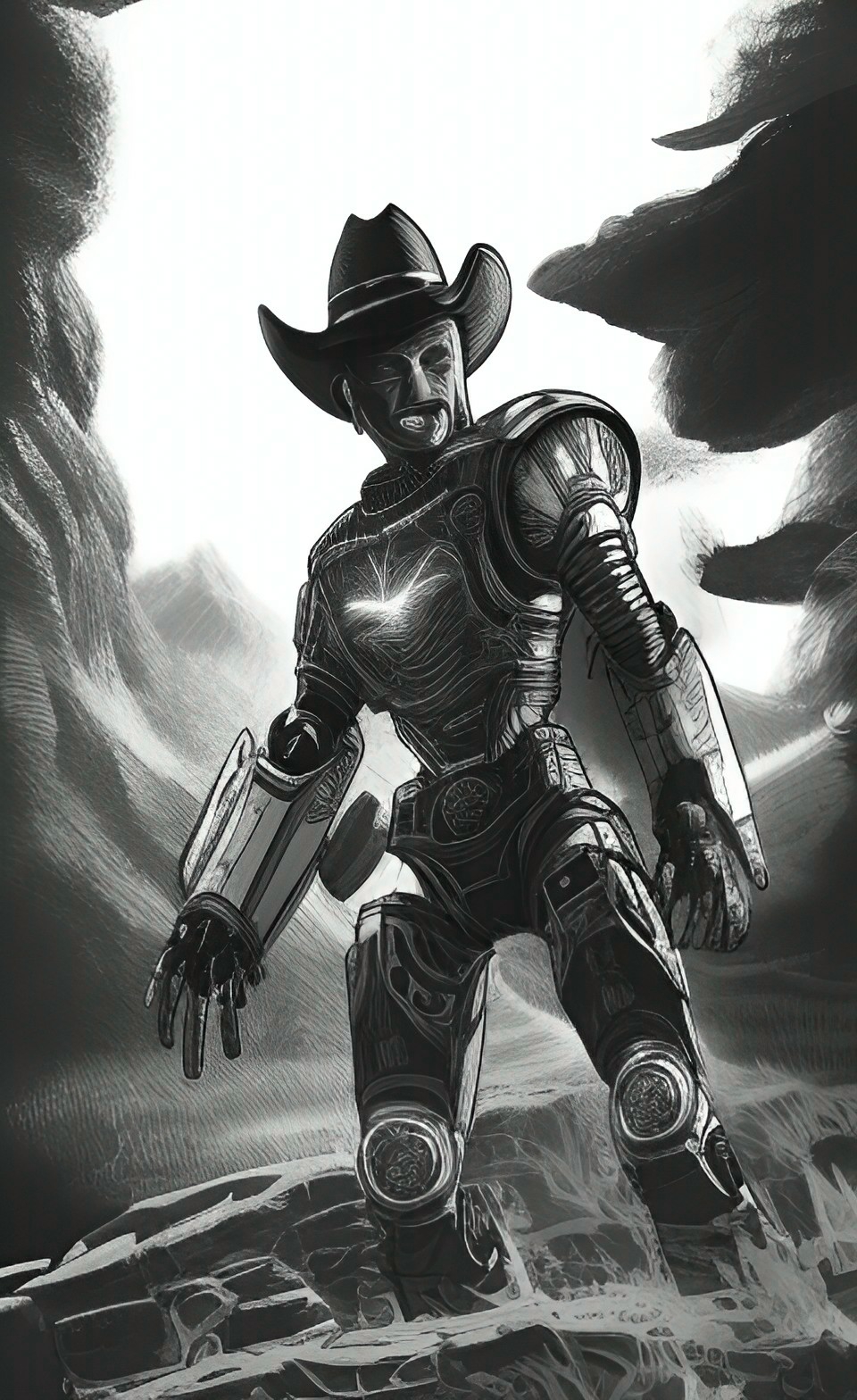
Whereas the life energy of a sentient being is the soul, Constructs do not have such a thing. Instead, they are imbued with an artificial anima called a Theoretical Engine. Mathematicians alone have the power to create a Theoretical Engine. While most Constructs are essentially unthinking drones that thoughtlessly obey the commands of their master, a minuscule few become "awakened" and leave their master in search of its own destiny.

An awakened Construct treads the line between that which is living and that which is not. An awakened Construct can think, act on its own volition, and can reason, but it isn't part of the reincarnation cycle. A dead Construct is truly dead.  An awakened Construct can access professions that do not require spirit points (such as Warrior, Investigator, and Mathematician).  A creature of this type can have any appearance, ranging from a lumbering, animate suit of plate mail to a small, spritely reconnaissance drone. Some Constructs are embedded into the consoles of factories and starships. Most Constructs have one or more accessories embedded in their bodies (such as a welding torch, a laser, or a nail gun). Constructs can be made of any durable material, although metal is the most common.

A Construct always has a variant of the Complete Regeneration innate power. A Construct needs neither to eat nor sleep, and can move at maximum speed indefinitely without fatigue. A Construct can speak, but it sounds monotonous when first activated; it's speech patterns gradually become more natural as it gains life experience.

With regard to special immunities, awakened Constructs are generally immune to illusions that target the mind. For example, an invisibility illusion that works by making the target not notice the caster's presence would usually not work on a Construct. However, an invisibility spell that works by bending light around the caster would work just fine. The Game Master is, of course, the final arbiter in these situations. Awakened Constructs are immune to Death Magic (likewise, they are immune to Life Magic) since they don't have souls. Instead, their animating force comes from their Theoretical Engines. This fact is why they are still vulnerable to Mathematician formulae - including Stun Construct, which could incapacitate the creature at inopportune times.

With most creatures, their health is measured in hit points. A Construct, however, has structural points instead. In combat, this is a significant advantage, as it takes ten points of physical damage to be dealt in a single attack sequence to remove a structural point. Thus, a Construct can sustain an infinite number of attack sequences that do a total of nine hit points or less. An armored drone generally starts "life" with two structural points, two weapon skills, and 1d4+1 non-combat skills. From then on, a Construct gains new skills in accordance with their chosen character class.  Combat and non-combat skills can be used to integrate accessories into the Construct. For example, a Construct might integrate an arc welder when taking the metalcraft skill, or integrate a revolver when taking the pistol skill. A Construct gets an additional Structural Point at odd-numbered levels.

The Player and Game Master would need to reach an agreement on the capabilities of the proposed Construct character. Power balance is critical. For example, a bulky, heavily armored Battle Construct would likely have a slow movement speed and may find other limitations such as the inability to cross rickety wooden bridges. On the other hand, a fixer-bot might have a high movement speed and be capable of very delicate procedures (such as repairing a watch or diffusing a bomb) but would likely be fragile and suffer from poor armor class.
Because a Construct is not truly alive, supernatural healing spells have no effect on the creature. A character with Armor Craft and/or Blacksmithing, and Engineering, however, could make repairs on the Construct, given proper tools. For example, a mechanic with proper training could use a welding torch to re-attach a severed Construct arm. Over time, the welding scars would dissipate, thanks to the power of the Construct's Theoretical Engine.

Because all awakened Constructs have the machine equivalent of the Complete Regeneration innate power, any Construct not destroyed by its injuries will eventually recover. A Construct brought to zero StP is incapacitated but not destroyed (much like a living person between -1 and -10 hit points. If a Construct is brought to -1 StP, it is destroyed, and only a wish or similar power can restore it.


DwarfWarrior Crafters

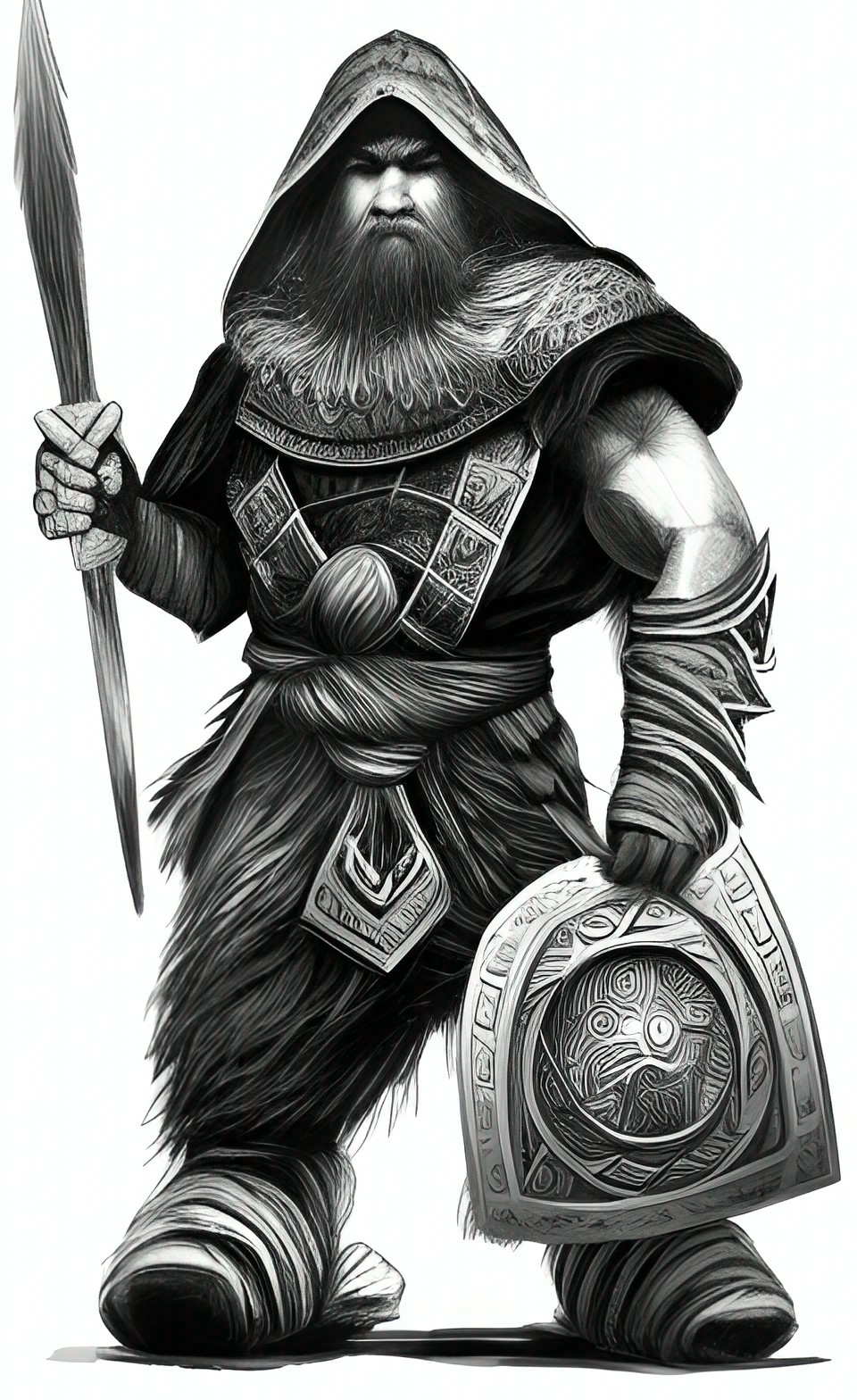
Dwarves are short and stocky lot. They are built much heavier than humans, and also much shorter. In many ways, Dwarves are as dense as Changelings are light. The average height for a Dwarf is about 4'3". A Dwarf body is strangely disproportional; they tend to have hands, feet, and a head that seems a too large in comparison with the rest of the body. 
Dwarf muscle and bone is much more dense than that of a Human. Because of this, they sink in water rather than float. Thus Dwarves have an innate fear of the vast oceans of Gaianar, much like a Changeling's fear of caves and crevices. 
A strange thing about a Dwarf's appearance is that no matter how young he or she may be the Dwarf will look gray and gnarled. Why this is, no one knows. Dwarven males begin growing a thick iron-gray beard around age seven or eight. Even the women are hairy, sprouting thick sideburns and hair on their knuckles and toes.

Dwarves and Elves have had notorious scuffles in the past over the disposition of natural resources. Dwarves believe nature is something to be harnessed and subjugated. They are renowned for their skill in mining and construction. They do not always consider the environmental consequences when undertaking their grandiose schemes. They have great aptitude in metalwork and gem crafting as well. All such crafting checks made by a Dwarf are at a +2 bonus.

Dwarves, for the most part, are honest and hard working, despite their frequently gruff and abrasive demeanor. They have a tendency to tell the truth without the use of euphemism. The most common alignments for Dwarves are Ordered, Saintly, and Benevolent.

The Dwarven race was once part of standard Humanity, for there was once a time when Gaianar was populated with but one race. However, because the people who later became the Dwarves had spent so many generations tunneling into the earth, they have been changed by the lack of light and the saturation of heavy elements in their diet. 

Accustomed to their dim, subterranean demesnes, the Dwarves have lost some of their normal sight. A Dwarf is completely incapable of seeing blue or purple; their retinas no longer have the cone receptors necessary for perceiving that kind of light. However, their eyes have instead become sensitized to lower wavelength light, giving them the ability to perceive reds that Humans, Elves, Fey, and Changelings cannot; This expanded perception gives them the ability to see body heat and temperature differentials on surfaces at up to 100' (10//) away. They can see large heat sources at three times that distance. Additionally, they have an innate sense of magnetism. They can automatically detect a magnetic source at up to 150' (15//) distance. If a Dwarf spends an entire round concentrating, he is able to detect the presence of steel and iron within 50', even through stone.   Because their magnetic sense also lets them constantly detect magnetic north, a Dwarf almost never gets lost. 

One final note on Dwarves: because of their long-standing work with minerals, heavy metals, and harsh tunnel gasses, a Dwarf has a 20% chance to resist any poison or toxin, whether inhaled, ingested or injected. Against skin contact poisons, Dwarves fair even better, having a 30% resistance.

An average Dwarf lives for approximately 85 years. Of the five races, they live the shortest lives.  Due to their hardheaded nature, they enjoy a 15% resistance to empathic powers.

Game Mechanics Summary: Base Movement of 9//, base AC of 8, very durable in combat, but low Dexterity and Charisma, resistant to poisons, infrared vision, innate sense of direction, master craftsmen, highly resistant to empathic attacks, generally structurally-aligned, fearful of water (because they sink in it), rather short-lived.


ElfWoodland Archers
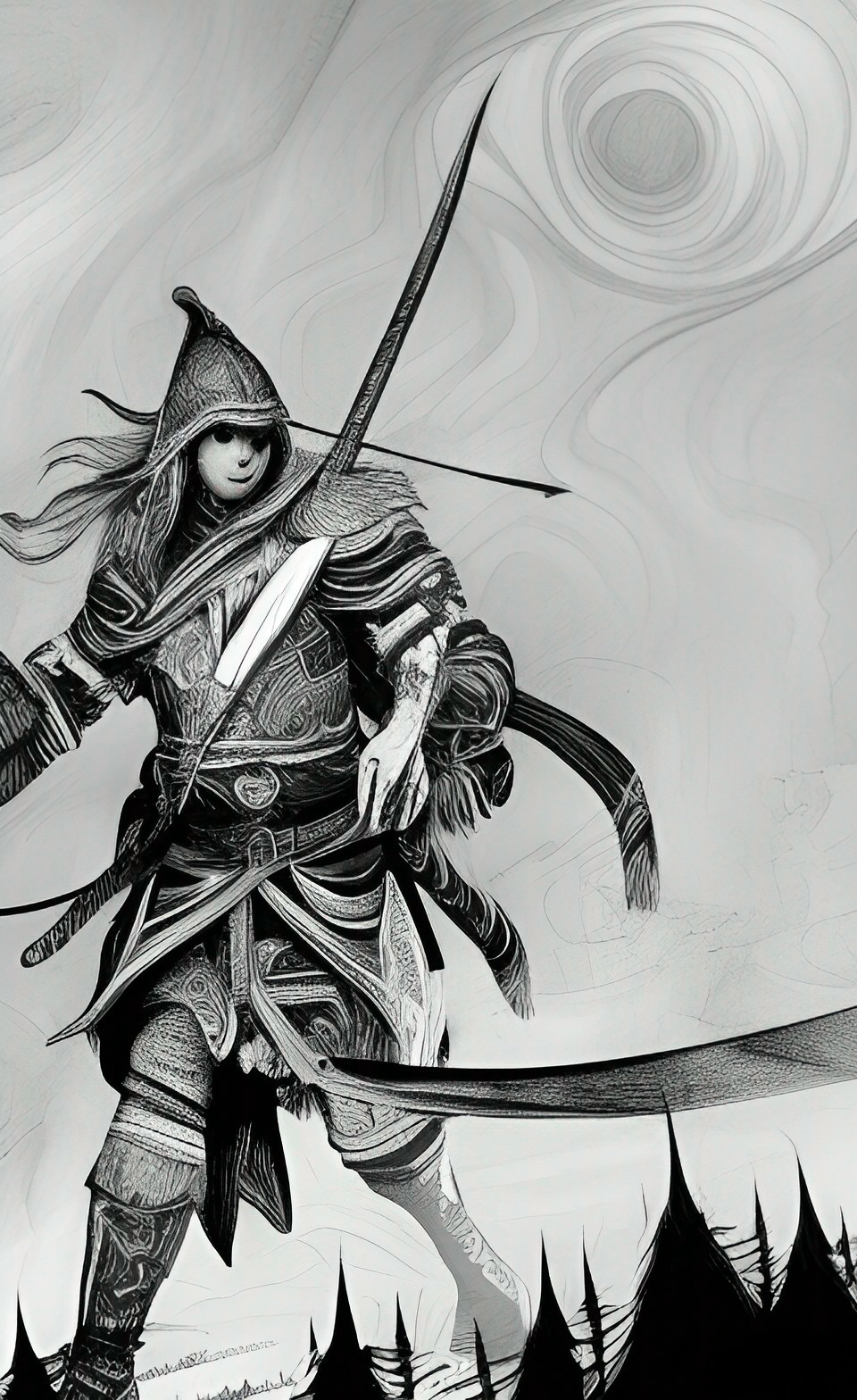
In the tradition of Tolkien, Elves are very tall and handsome creatures, standing, on average, 6'4". They tend to have brown or auburn hair and eyes of green or hazel. They have slimmer build than their human counterparts, and their ears fluted as opposed to rounded, like in humans.

Elves are hearty outdoors types who believe in coexisting with, as opposed to conquering, nature. Because of their strong links with nature, they tend to be a bit anemic in their supernatural beliefs, thinking that which cannot be seen or touched is unimportant. 

Elves are a reclusive lot, and rarely venture out of the forests they inhabit. They live in small, loosely knit nomadic societies. Non-Elven adventurers should be forewarned that Elves tend to think themselves vastly superior to other races. This air of superiority, combined with their xenophobia, has provoked many a war against the Elves. This has only served as reinforcement for their reclusive ways.

Elven societies tend to have fully neutral (or Apathetic) alignment although individual elves may possess any alignment.
It is known that Elves can see in ways that a Human cannot. The eyes of an Elf are much more sensitive to dim light than a human's. This is due to the high density of light-sensitive rods that make up the Elven retina. Thus an Elf can see adequately in all but the blackest night, which translates in game terms to a +4 bonus versus any low-light penalties, so long as the darkness is not complete or supernaturally caused. This gift does not come without a price. An Elf faces a -1 penalty to any save versus light-based attacks.

One of the useful Elven abilities is their skill at blending in with their natural surroundings. In a heavily forested area, an Elf can attempt to move without being seen. An Elf player character attempting to move without being seen has a 20% chance of success. This power has a similar has an effect similar to the innate power Camouflage. If an Elf happens to be an Investigator (or related subclass) or any character class that uses Stealth, the Elves’ innate power of Stealth is cumulative with any Stealth capabilities granted by the character class.

An Elf also has superior hearing. Perhaps it is the shape of their ears that give them such a formidable perception of sound. In any event an Elf has an innate hear noise rating of 30%. This is roughly twice the human norm. This is not to say that an Elf can hear things from farther away, but instead can hear things at normal distance better. Thus their hearing bonus is more akin to a magnifying glass than a telescope.
One final note on Elves: they have managed to take bow crafting and hunting to an art form. Any bow created by an Elf is by nature +1 to hit. Additionally an Elf using any kind of bow (other than crossbow) hits at +1 to hit. Finally, an elf using a bow that he has personally crafted can shoot at +3 to hit. Their hunting proficiency checks function at +2. 

Elves are the product of genetic engineering whose purpose was to extend the normal Human life span. While the overall goal of the experimentation was successful, the product was a race of tall, spindly people who don't care much about anything and cannot interbreed with normal Humans. An Elf can expect to live for 420 years. An Elf's apathetic ways leave it the most vulnerable of the five races to empathic attack: their resistance is a mere 5%.

Game Mechanics Summary: Base Movement of 12//, base AC of 10, chaotically aligned in most cases, low-light vision, bow mastery, stealth and hear-noise bonuses, long-lived, weak against empathic attacks.


FeyElemental Beings
Quick Links: External link opens in new tab or windowFey Subtypes by Color

The only major race on Gaianar that is alien to Gaianar, the Fey were once energy creatures that lived in a dimension far different than that of the Gai system. But it was during the period that Scaxathrom ruled Gaianar that his summoner-priests learned to tap into other worlds and bring forth creatures to do their Master's bidding. Mostly, the Scaxathrom Priests raised demons in the form of elementals, spiritual spies, and dark warriors. But occasionally the blasphemous clerics would tap into the realm that was the home of the Fey. 
The first thing about understanding the Fey is this: They don't want to be here. Their native plane of existence is a universe where energy is more common than matter, and the speed of light makes this universe's light seem like molasses. They come from a bright universe where change is constant, and where the background radiation of the cosmos sounds like an eternal symphony. In the realm of the Fey, they look like angels of light and live forever, for energy doesn't decay there, it only changes form and frequency.

 From a world of light they were summoned into the cold, hard iron shackles of Scaxathromite slavery. Ensnared by the Scaxathrom Priesthood, these creatures were forced to commit all manner of atrocities against the people of Gaianar during the Great Cataclysm. Though it took several generations to best their masters, they at last did gain their freedom (at the cost of thousands of Scax-Priest lives, and tens of thousands of bystanders.)

 Faced with the extinction of their soul-light (for energy in this universe does decay), and taking on a solid, organic form, they grudgingly chose the latter. But in their minds, they still think like energy creatures. They are drawn to bright lights. Fire is sacred to them. Energy is like sustenance. So much is this patterned in their minds, that they frequently forget that their physical bodies do need food. And this is why most of the Fey are very thin. They take no joy in eating, for each bite of food is a reminder of their captivity and their status as refugees.
 Their thoughts are quite linear. For as energy automatically takes the path of greatest resistance to least resistance, so it is true that once one of the Fey fix an idea in his or her head, no force can dissuade them from the resultant course of action. Some call the Fey stubborn, but in truth, they can act no other way. They hate slavers. They will kill those who trade in sentient flesh. Regardless of alignment or faith, The Fey will kill slavers when encountered.

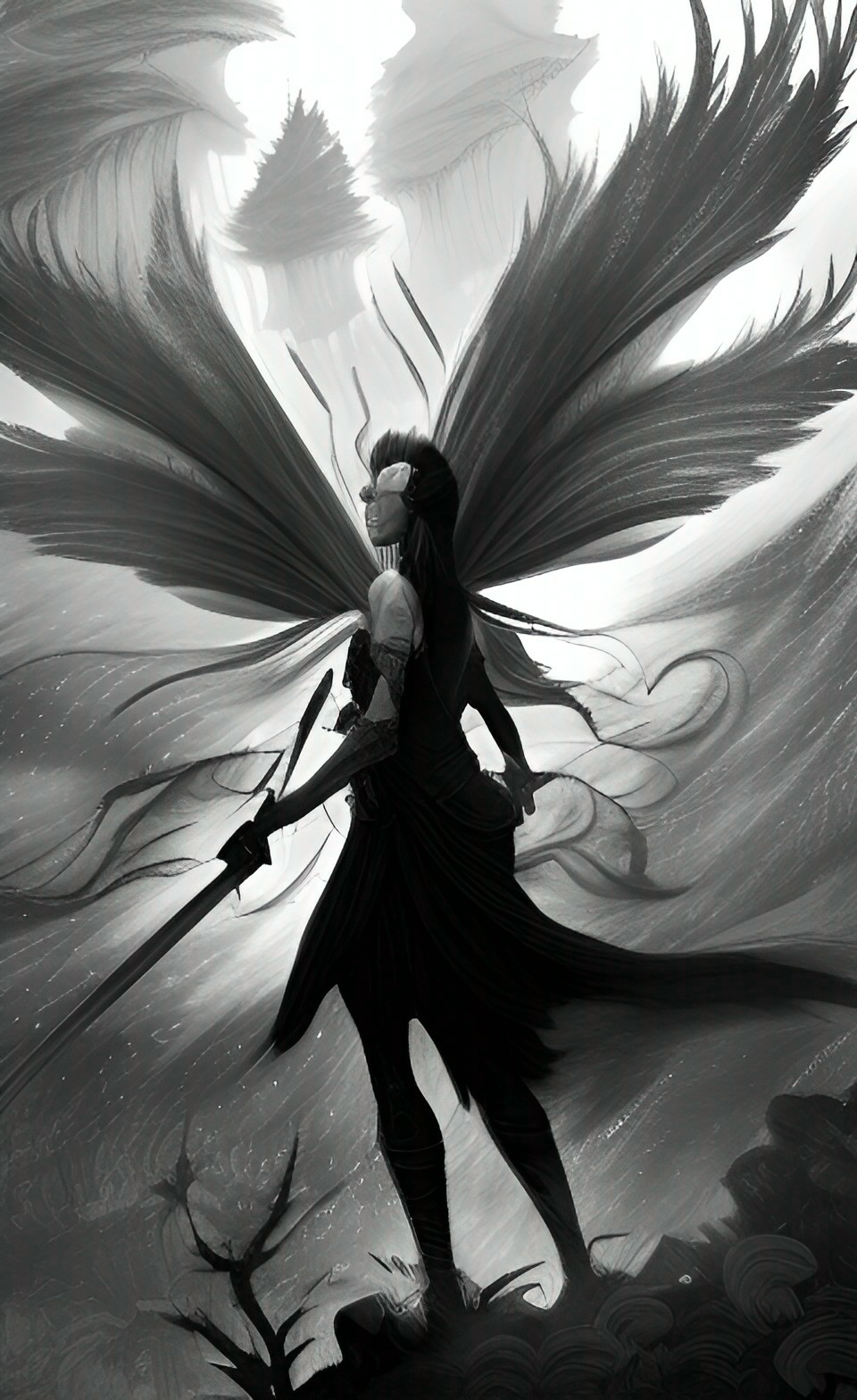
 Very few of the Fey are Priests, for even the presence of good-aligned clergy leaves a bad taste in their mouths. The Priesthood (of Scaxathrom) brought them to Gaianar, enslaved them, and marooned them. The Fey have a racial memory for their home realm. Those successive generations who have never seen the Realm of the Fey still know what it looks like. And to stare into a night sky that is silent and cold and black is quite a bitter thing indeed. In their solid form, the Fey appear as small winged Humans or winged Changelings. They stand on average 4' tall and are sturdily built, though not so well as the Dwarves. Their skin is smooth and nearly albino white and does not tan. They have little in the way of body hair except that which grows from the scalp. Their hair color is usually white, or of a color that matches their wings. Their blood is clear, not red. 

No one outside the Fey community exactly knows this race's method of reproduction. And while a Fey may identify "himself" or "herself" as male of female, the race has so little in the way of secondary sexual characteristics that the exact gender of a fully clothed Fey is nearly impossible to determine - but the Fey, they know. And how they propagate is a secret they kill to defend, regardless of alignment or legal consequences. The Fey still have primary sexual characteristics (thus making it possible to engage in sex), but while fully clothed, the look androgynous.
Their own secret reproductive methods doesn’t prevent the Fey won’t be promiscuous with other races. That, they do for entertainment and fun, but not for reproduction. However, it is still unknown if Fey reproduction even involves a sex act, or whether it somehow involves an exchange of energy while assuming the Phoenix flight mode. Regardless, some Fey, particularly the Amber Fey, have frequent carnal relations with members of other races.

As indicated by the presence of their wings, a Fey has the ability to fly. With wings unfurled, they span 4' for every 1' the Fey has in height. A Fey's wings are not feathered but instead have a texture somewhere between a bat and a butterfly's.

A Fey can fly indefinitely, unlike the Changelings. However, their flight speed is not quite as rapid or agile. Under normal conditions, a Fey has a flight speed of 24// (twice the speed of a running man) and a maneuverability class of "B" (able to hover and turn 180 degrees in the same action.) At the cost of one point of Endurance per three rounds, however, a Fey can boost flight speed to 32//.

In dire emergencies, however, a Fey can assume his or her true form as an energy creature and fly for brief periods at 60// with maneuverability class "A". This form of flight is called "the phoenix flight", as the Fey assumes a form that looks somewhat like an Angel of light, swirling wind, and eldritch fire. In this form, they can phase through wooden structures without effort, and can even pass through stone, so long as it is less than an inch thick. Iron, however is always impenetrable, and the Fey dislike iron in any case, as will be explained later.

Resuming their true form is not without its price. A Fey loses one hit point for each round in phoenix flight and these lost points cannot be recovered with healing invocations, only with time. A Fey recovers hit points lost to the phoenix flight at a rate of one point per hour.

Like a bat or a dolphin, those of the Fey can sense distance and movement by unseen ways. This ability is called Detect Motion Vectors. A Fey employing this ability can detect movement and direction of creatures and objects as far away as 15// (150'). This ability, when used, covers a 360° radius. It can be used at will, and maintained indefinitely, but it does require a small amount of concentration. Thus combat is possible, but supernatural invocations are not. Noise cancellation powers or spells will render Detect Motion Vectors inoperative. If the Fey is actively seeking invisible or cloaked creatures, this power will reveal them to the Fey if successful on a Perception check.

Being creatures of energy, a Fey can summon and hurl vortices of wind that cause 1d6 damage to its victim. The vortices have a speed of 90//, and have a range of 45//. Implementing this power costs the Fey one-quarter point of Body-Mind-Spirit per use.

A Fey's vision is somewhat complementary to that of the Dwarves. While a Dwarf can see in infrared, but is blind to the upper spectrum, a Fey can see into the ultraviolet band, but is blind to red. As a result, a Fey's day vision is excellent, giving him or her a +1 to all visual tasks (including combat.) At sunset, however, they are more deeply blinded than most, and therefore suffer a -2 to visual tasks unless properly aided with a light source. This penalty is in addition to any ordinary low light penalties.

Despite the apparent superiority of this race, they do have limits and weaknesses. The Fey are intolerant of iron. Wielding an iron weapon leeches a point of Endurance per turn. Iron armor costs a point per round. Being chained in iron shackles costs two points per turn. While this power drain cannot kill a Fey, it can incapacitate. Moreover, a Fey cannot engage the phoenix flight while in physical contact with iron.
A Fey has a base armor class of 9, a ground speed of 9//, and an empathic resistance of 10%. A Fey has a life span of 165 years on average. Members of the Fey race incur a 5% experience penalty.

Game Mechanics Summary: Base Movement of 9//, Base AC of 9, non-natives to Gaianar, full flight capability, able to assume a ghostly, energy form for limited periods, able to fire wind blasts at foes, motion-vector detection, ultra-vision, very vulnerable to iron, suffers an experience penalty.


HumansInfinitely Adaptable
We all know what Humans are like. They are the most diverse in appearance with respect to height, width, skin color, and bulk. A player can choose to play a human from a wide variety of Human archetype. Pale, sallow, brown, and black subtypes exist in various places on Gaianar. In the Known World, humans generally fall into one of the four following archetypes; based on which continent they were born on.

North Point: Characters born here tend to be very pale skinned, have dark black hair and gray or blue eyes. They are stocky and a height of 5’6” is common for the average male. Females are slightly smaller in both height and build.

South Point: A person of South Point descent tends to be very tall and wiry. They have skin that ranges from the color of milk chocolate to the color of India ink. They have eyes either brown, dark hazel, or honey-amber. A Male, on average, stands around six feet tall. Females can exceed the height of a man and also tend to be more muscular. Many South Point societies are matriarchal. South Point descendants generally display a delicate beauty because of their tallness and slight build. This feature gives them a +1 to Comeliness when rolling attributes.


West Point: Natives to West Point are somewhat shorter than their South Point cousins. Humans from this area stand about 6'3" on average and have red, auburn, or brown hair. Their skin tends to freckle a lot in summer. While thicker in build than their Southern cousins, they still appear willowy at first glance. They usually have green or sea blue eyes.


East Point: People from this continent are the smallest of all humans. Standing only about 5'3" on average, these people are sallow in skin tone and have almond shaped eyes. Many Eastern descendants have brown or hazel eye color, but dark black and pale green are anomalies that occasionally surface. The Humans from this area are medium in build and give a very sturdy first impression.


It should be known that because Humans lack many of the special innate abilities of the other races, a Human player character gains a 5% bonus to experience. Human player characters can be of any alignment. The average human life span is 105 years. Humans have a standard empathic resistance of 10%.
Game Mechanics Summary: Base Movement of 12//, Base AC of 9, can be of any alignment or class. Gain an experience bonus.


Undead (Optional)Sturdy, dependable, no longer living

Sentient Freewilled Undead


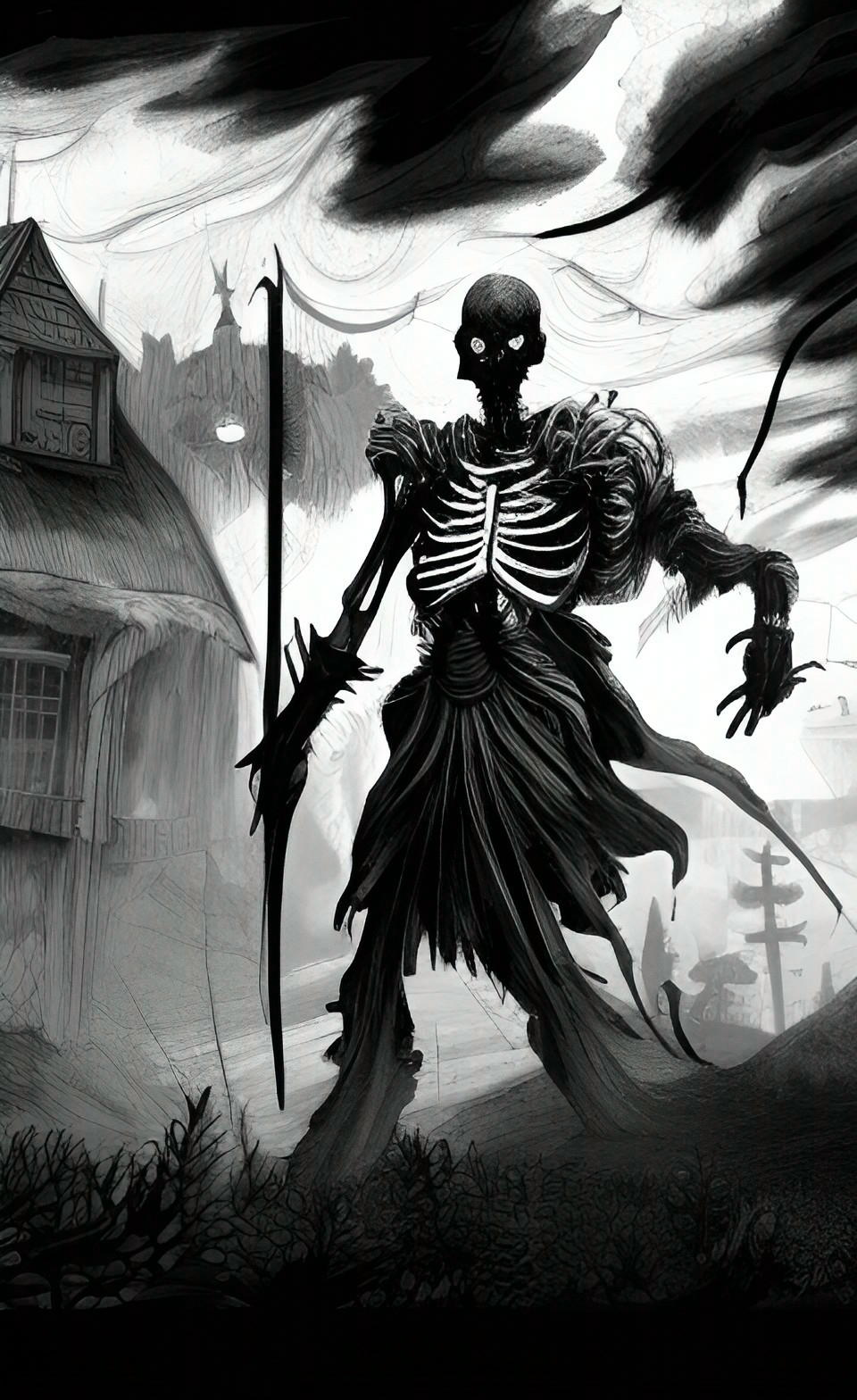
This optional character race can only be played with the Game Master’s permission. The Player and Game Master must work together in order to develop a playable Undead character. Some considerations that need to be worked out are: Is the character a “clean” Undead such as an animate skeleton, or is the character something foul like a zombie? Alternately, the character could be a “preserved” Undead like a mummy. It is also worth noting that sentient, free-willed Undead have full civil rights thanks to the Undead Truce. That does not, however, mean they are made to feel welcome. Quite the contrary, sentient Undead are almost always met with fear and suspicion. Trust amongst members of the local community has to be developed over time (if it can at all).

The Game Master and Player should also determine the backstory for why the character is Undead. Is there an unfinished quest that drives the character from beyond the grave? Is there an unfulfilled oath still outstanding? What the character the victim of an evil spell? Or was the character simply unlucky enough to die of natural causes in a region with intense ambient Death Magic? Perhaps the character is driven by the need to get vengeance upon his/her killer. Or perhaps the character is the killer and now he/she uses this new Undead existence as a means to atone for past sins. Regardless, there needs to be a reason why the character is a sentient, free-willed Undead.

It would also be useful to develop how the Undead character gets along with the living members of the community. For example, if the character is an Undead whilst acting in the position of Speaker For the Dead, do the townsfolk view this as a mockery, or do they view it as highly pragmatic (the dead understand the dead, after all). Perhaps the Undead character was a murder victim in life, and thus keenly understands the need for lawful justice.

Like Constructs, Undead regenerate over time. Undead characters who suffer grievous injuries such as amputations or crippling blows to extremities will eventually recover and regrow the limbs after a few months. Unlike Constructs, however, Undead regenerate in proportion to the intensity of the ambient Death Magic available. For instance, an Undead might regenerate ten points per day whilst travelling in the Planes of Conflagration or Shadow, four points per day on North Point, two points per day on East or West Points, one point per day on South Point, or one point every five days in the Planes of Light or Radiance. Ordinary healing spells do not work on members of the Undead. Spells that inflict Death Magic damage are generally restorative to sentient, Free-willed Undead. Likewise, a Necromancer can use the specific spell Heal Undead against an injured Undead character.

As the Undead generally have non-functioning sensory organs, their ability to see, hear, taste, smell, and touch are all accomplished via magical approximations of the original senses. An Undead’s vision includes the ability to detect magical emanations (this is seen as a colorful overlay on top of the washed-out look of mundane objects). Such magical detection is effective to 120’. An Undead’s hearing is usually on par with a living person’s senses. However, Undead usually have inferior senses of touch, taste, and smell. The Game Master and Player can work together in order to determine if the character will have other capabilities, such as empathy, life detection, the ability to perceive Stillpoints, the ability to detect lies, etc. Game Masters should take care to balance an Undead character’s special abilities with an equal number of special limitations.

Some Undead (depending on their physical configuration) may retain the ability to eat but they don’t require physical sustenance. Rare Undead (such as vampires) can draw hit points to themselves by murdering the living. However, such sentient, free-willed Undead would quickly wear out his/her welcome by doing so. More common forms of Undead (such as skeletons and mummies) must either heal over time or use spells to recover from damage.

Regardless of the type of Undead the player creates, all Undead should have the following benefits: 1.) They don’t need to eat; 2.) They are utterly immune to poison, disease, and radiation; 3.) They handle temperature extremes better than the living (although they are still susceptible to obvious threats such as fire and ice); 4.) They are immune to some (but not all) illusions since they have magical sight; 5.) They don’t feel pain (although they can tell when they have been injured).

Undead player characters can be any character class. However, some professions are more challenging to an Undead character than others, and some spells will have alternative outcomes.

Undead player characters get the same BMS, spirit points, and hit points as their living counterparts and is dependent upon the character class (or classes) selected. The Game Master may impose a -5% or -10% experience penalty for Undead characters who have an abundance of special abilities pertaining to their current configuration.

Like Constructs, Undead do not have a specified lifespan. They basically live unless killed (either on purpose or by mishap). Dead Undead cannot be resurrected by any means. If slain, their souls will travel to whatever afterlife is appropriate for their faith tradition and moral standing. Whereas Constructs run the risk of becoming ossified after a few centuries of life, Undead begin to suffer from carelessness after a few centuries of Undeath. Basically, the longer an Undead lives, the greater chance that he/she will die through accidental means. Likewise, Undead that are bored or understimulated for extended periods of time (years or decades) might "fade". This is a process wherein the individual progressively becomes less active and eventually ceases to exist as an Undead. The person's spirit departs to whatever afterlife is in keeping with their faith and moral compass.

Finally, the Game Master may rule that an Undead character will need daily rest. Undead do not need to rest in order to restore their bodies. However, a sentient mind still needs to rest. To that end, an Undead character may still need to sleep for 3-4 hours each day. This type of rest is called "regenerative slumber". It is shorter than sleep but more difficult to interrupt.

Werites (Optional)Hybrid Humans

Quick Links: External link opens in new tab or windowWerite Abilities & Modifiers |External link opens in new tab or windowWereite Subtypes

In the dim past, certain factions of Humanity set out to improve the lives of people using DNA from creatures common to the world of Gaianar. Their reasoning was simple: by taking certain key aspects from the animal kingdom and carefully melding them into the Human genome, the result would be a stronger and healthier person who could thus live a better and longer life.

Their goals were at first noble, but soon the desire for power corrupted the minds of these lost scientists and their followers. They no longer wished to better Humanity, but to instead create "better" people, and thus they began their own downfall by turning away from their fellow men. In the end, both their created beings (whom the governments, military, and scientific factions had enslaved) and those "common humans" that they had sought to replace with their corrupted science and magic rose up and destroyed the oppressors.

But their creations lived on. Through some fluke of genetics, these half-humans were not only able to reproduce, but their offspring bred true to the form of their parents. And so, they have lived for centuries. And though their numbers never grew to excess (for though they breed true, they are not particularly fertile) and few accept them (the common folk view the Werites as monsters), they are still a fascinating people with great strength of mind and body.

Werites are generally very accepting of others, for they are considered outcasts by many and thus are not hasty to cast judgment. With great effort, they can even blend in with humanity, although maintaining a fully human form is very taxing.

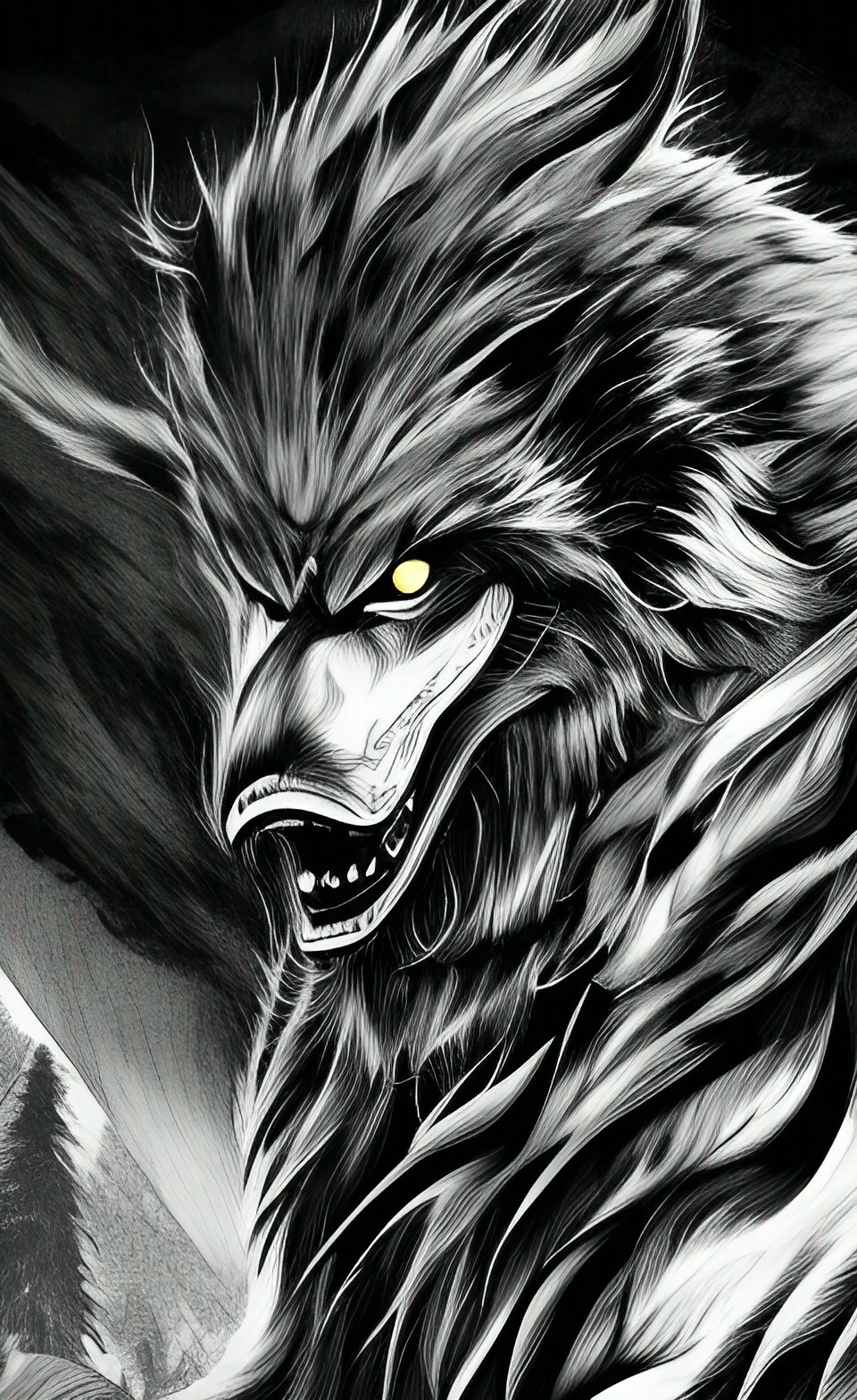
No one is sure how many different were-creatures were originally created, but the most common are listed here. In most cases, the human form was melded with that of a mammal, though the Weredragon is an exception. However, not all crossovers were successful, and many of the truly awful mistakes escaped before being destroyed. All adventurers must be warned of the legends about other horrible crosses between man and beast – things such as Werespiders and Weresnakes, though rare, are said to be both mad and evil beyond redemption.

Appearance of a Werite:
Because a Were-creature is a Human/animal hybrid, the resultant being appears as a meld of the two. For instance, a werewolf would walk on two legs and have a generally lupine face and furry arms and legs. A Werebear would be tall and muscular, but not so tall and muscular as a true bear. Regardless of the type of hybrid, they all have bipedal movement, binocular vision, and possess hands with opposable thumbs, though Werites have cruder hands than humans.

These creatures also have the sensory capabilities of the animal subtype, thus a Werewolf would have an excellent sense of smell, while a Werecat would have superior low-light vision. In their native form, however, they are only 20% likely to pass for human, and then only in darkened conditions while the Werite is wearing a hooded cloak.

Alignment Restrictions:

Were-creatures cannot be of Structured alignment, for that is simply not in their nature. Because most animals are of "Animal", "Unaligned", or Neutral" alignments, the hybrid being is usually Benevolent, Chaotic, Apathetic, or Malevolent. Occasionally, a Werite may also be either Heroic or Satanic. Because they cannot be Structured, certain character classes (most notably Gunslinger and Paladin) are forbidden.


Things to Remember


  • All attribute modifiers are based on Human norm.

  • Carefully read about the weakness of races that seem to be conferred with special powers.

  • Not all character races are well-suited for all character classes.

  • Some exotic character races have experience penalties.

  • Some character races (particularly Constructs) experience negative social stigma.

Column


Column


ctodd@gaianar.com


  • Home
  • Downloads
  • Rules for Players
  • Spiritual Powers


Copyright 1991-2021 World of Gaianar - Version 3.0

Written and Designed by Christopher Todd

Co-Designed by Matthew Hannum


close lightbox